Alphabet Tracing and Dot Marker for Kids: A Practical Learning Tool
Alphabet tracing and dot marker activities are essential tools for early childhood education, offering a hands-on approach to learning the alphabet. These exercises help children develop fine motor skills, hand-eye coordination, and letter recognition. For parents, educators, and content creators, finding the right resources can be challenging. The Alphabet Tracing and Dot Marker for Kids Vol-1 stands out as a well-designed activity book tailored for toddlers and young learners.
What Makes Alphabet Tracing and Dot Marker for Kids Unique?
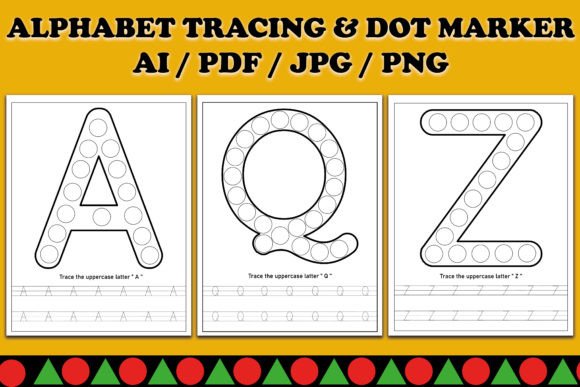
The Alphabet Tracing and Dot Marker for Kids is more than just a printable worksheet. It combines structured tracing exercises with engaging dot marker activities, creating a dynamic learning experience. Each page is designed to guide children through the process of forming letters while reinforcing correct letter shapes and strokes. The inclusion of dot markers adds an interactive element, encouraging children to complete tasks in a fun and creative way.
This resource is particularly beneficial for children who are just beginning to learn the alphabet. The combination of tracing and dot markers helps reinforce letter formation, making it easier for kids to remember and recognize each letter. The design is also visually appealing, with clear and easy-to-follow instructions that make it accessible for young learners.
Comparing Alphabet Tracing and Dot Marker for Kids with Other Options
When considering alternatives, many parents and educators turn to digital apps or traditional worksheets. While digital options offer interactivity, they often require screen time, which some may prefer to limit. Traditional worksheets, on the other hand, may lack the engagement that dot markers provide. The Alphabet Tracing and Dot Marker for Kids bridges this gap by offering a printable, offline solution that still encourages creativity and interaction.
Other alphabet tracing books may focus solely on writing practice, without incorporating the use of dot markers. This makes the Alphabet Tracing and Dot Marker for Kids a more versatile option, especially for children who benefit from multi-sensory learning approaches. The addition of dot markers allows for a tactile experience, which can be especially helpful for kinesthetic learners.
For those looking for customizable resources, the availability of AI source files and high-quality image formats (PNG and JPG) gives users flexibility. This is particularly useful for content creators who want to integrate these materials into larger projects or print them for personal or commercial use.
Strengths and Tradeoffs of the Alphabet Tracing and Dot Marker for Kids
One of the main strengths of the Alphabet Tracing and Dot Marker for Kids is its comprehensive design. With 52 pages of content, it provides a substantial amount of material for extended use. The book is also optimized for printing, with dimensions of 8.5 × 11 inches and no bleed requirements, ensuring that it prints clearly and professionally.
Another advantage is its suitability for both personal and commercial use. This makes it an attractive option for educators, homeschoolers, and small business owners looking to create value-added products. The high-resolution images ensure that the printed version maintains clarity, making it ideal for use in classrooms or as part of a learning kit.
However, there are some tradeoffs to consider. The book is focused primarily on alphabet learning and does not include additional elements such as phonics or vocabulary building. For families seeking a more comprehensive language curriculum, this may not be sufficient on its own. Additionally, while the design is unique, it may not appeal to all children, depending on their preferences for visual style or activity type.
Best Fit Situations for Alphabet Tracing and Dot Marker for Kids
The Alphabet Tracing and Dot Marker for Kids is best suited for children aged 2 to 6 who are just starting to learn the alphabet. It’s ideal for toddlers who need simple, structured activities to build foundational literacy skills. The book is also useful for parents and educators looking for a ready-to-print resource that requires minimal setup.
For content creators, this book offers a solid foundation for developing educational materials. Its printable format and high-quality design make it easy to integrate into a variety of projects, including Amazon KDP books, classroom kits, or home learning packages. The fact that it has been tested on the Kindle Direct Publishing platform adds credibility, ensuring that it meets the standards required for online distribution.
It is also a good choice for families who want to reduce screen time while still providing meaningful learning opportunities. By using physical worksheets and dot markers, children can engage in active learning without relying on electronic devices.
When to Consider Alternative Resources
While the Alphabet Tracing and Dot Marker for Kids is a strong option, there may be situations where other resources are more appropriate. For example, if a child is already familiar with the alphabet and needs more advanced practice, a different tool may be better suited. Similarly, if the goal is to introduce phonics or reading comprehension, additional materials would be necessary.
For those who prefer a more colorful or animated approach, digital apps or interactive workbooks may offer greater engagement. However, the Alphabet Tracing and Dot Marker for Kids remains a reliable and practical choice for basic alphabet learning and skill development.
Realistic Use Cases and Practical Comparisons
Consider a parent who wants to supplement their child's preschool education. The Alphabet Tracing and Dot Marker for Kids provides a straightforward, cost-effective way to reinforce letter recognition and writing skills. Compared to expensive educational programs, this book offers a more affordable alternative without sacrificing quality.
Another scenario involves a small business owner looking to expand their product line. By using the AI source files and high-quality images, they can customize the content and create a unique product for sale. This flexibility sets the Alphabet Tracing and Dot Marker for Kids apart from generic alphabet books that may not offer the same level of adaptability.
For educators, the book can be used as a supplementary resource in the classroom. It complements existing lesson plans and provides a hands-on activity that students can complete independently or in groups. The printable format also makes it easy to distribute to multiple students without the need for additional software or equipment.
Conclusion
The Alphabet Tracing and Dot Marker for Kids Vol-1 is a valuable resource for parents, educators, and content creators. Its combination of tracing and dot marker activities supports early literacy development while offering a flexible and printable format. While it may not cover every aspect of language learning, it excels in its core purpose of helping children master the alphabet through engaging, hands-on practice.